 ESPEC North America, Inc. (Corporate office)
4141 Central Parkway
Hudsonville, MI 49426 USA ESPEC North America, Inc. (Colorado/Qualmark office)
12600 E. Smith Road
Aurora, CO 80011 USA
303-254-8800

Meeting the rigorous demands of the aerospace industry means subjecting products to some of the most extreme environments known to engineering. Whether it’s the harsh temperatures of space, the intense pressure of high altitudes, or the constant vibration of flight, aerospace components must withstand conditions far beyond those faced by other industries.
From propulsion systems and guidance technologies to avionics, defense mechanisms, and missile systems, the aerospace sector covers a broad spectrum of specialized sub-sectors. Each has unique testing requirements, all focused on ensuring reliability and safety in mission-critical applications. For small satellites to commercial spacecraft to the most advanced flight electronics, any failure could have catastrophic consequences.
Naturally, testing for the aerospace industry involves a diverse range of environments. For example, thermal testing evaluates a system’s ability to withstand extreme temperatures, while mechanical testing ensures it can endure high levels of vibration and shock. Altitude and vacuum chambers, on the other hand, replicate the conditions of space and high altitudes, simulating low pressure and reduced oxygen levels. Meanwhile, humidity testing gauges a component’s ability to resist moisture-related damage, while combined tests like HALT and HASS put components through extreme stresses to discover weaknesses early. Finally, material testing ensures aerospace materials retain their integrity under harsh conditions, from corrosive environments to extreme pressure.
Aerospace environmental testing is critical for mitigating risks and ensuring the highest standards of safety, reliability, and performance. In a field where failure is not an option, these tests are indispensable for validating that components and systems can perform under extreme conditions.
The consequences of inadequate testing can be catastrophic. A failure in any component could trigger mission failure, safety hazards, or even catastrophic accidents. Component failure, such as an avionics malfunction, could cause an entire mission to fail. In critical defense or space missions, this could lead to irreparable damage, loss of life, and billions in lost resources. Moreover, insufficient testing can lead to costly schedule delays as engineers are forced to scramble to correct issues that should have been caught during the testing phase.
Thorough testing offers numerous benefits. First, it improves the overall reliability of systems by identifying weak points early in development, preventing costly failures during real-world operations. It also contributes to cost efficiency by reducing the need for post-launch repairs or mission delays. Moreover, it helps ensure compliance with industry standards and regulations, such as AS9100 or MIL-STD-810. This regulatory compliance is crucial for aerospace companies that need to maintain certification and meet strict performance criteria. Perhaps most importantly, it lends to mission success, safety, and enables companies to meet critical deadlines. With reliable testing, aerospace engineers can be confident that their systems are ready for the challenges they’ll face in the air, space, or beyond.
As a leader in aerospace environmental testing, ESPEC North America brings over 40 years of experience in helping aerospace professionals meet and exceed the most demanding testing requirements. Our expertise spans a wide range of environmental testing disciplines, from thermal and mechanical testing to altitude, and humidity testing. We specialize in providing high-performance testing chambers that simulate the extreme conditions aerospace systems encounter, ensuring products meet the rigorous demands of reliability, performance, and safety.
Of course, at ESPEC, we go beyond just providing testing chambers—we offer our customers valuable support and guidance throughout the testing process. Our team’s technical expertise and commitment to quality help aerospace engineers and suppliers find the right solutions to their most challenging testing needs.
Thermal testing is one of the most essential aspects of aerospace environmental testing. Aerospace components are often exposed to extreme temperature fluctuations, from freezing cold in space to scorching heat during re-entry. To simulate these conditions, thermal testing includes several methods, each aimed at assessing how components perform under different thermal conditions.

Mechanical testing is equally crucial for aerospace components, as it evaluates how well a component can withstand physical forces like vibration, shock, and pressure. This includes various testing techniques, such as HALT (Highly Accelerated Life Testing) and HASS (Highly Accelerated Stress Screening).
Altitude testing is crucial for aerospace components that must operate in high-altitude or space environments, where atmospheric pressure is much lower than at sea level. By simulating these low-pressure conditions, altitude testing ensures that components such as sensors, electronics, and propulsion systems will function properly when exposed to high altitudes.
ESPEC’s altitude test chambers are designed to replicate the conditions of high altitudes, offering precise control over pressure and temperature. These chambers provide a low-pressure environment that simulates the conditions components will encounter during high-altitude flight.
Combined altitude and temperature testing identifies if components can withstand both the lack of atmospheric pressure and the extreme temperatures associated with air travel.
Humidity testing is vital for aerospace components that will be exposed to moisture or high humidity during their life cycle. Excess moisture can cause corrosion, electrical failure, or material degradation, making it essential to test components in high-humidity environments.
Humidity testing simulates the effects of exposure to varying levels of moisture and high-temperature conditions. This helps manufacturers determine how well components resist corrosion, oxidation, and other forms of moisture-related degradation. Combined humidity and temperature testing can replicate the real-world conditions of aerospace environments, including the high humidity of tropical climates or the moisture encountered during space re-entry.
While individual environmental tests are important, combined environmental testing presents multiple conditions at once to stimulate real-world stresses aerospace components experience. For example, avionics and satellite components are often subjected to both thermal extremes and vibration during flight. By combining these tests, engineers can identify failures early in design that wouldn’t be detected by single-stress tests. This is arguably your most valuable tool in design testing and production screening to mitigate failures and deliver a more robust, reliable product to the market or field.
At ESPEC, we’re experts in combining environmental stresses—such as extreme temperature stress and six degrees of freedom, repetitive shock vibration—into a single, integrated test. This approach is invaluable for applications like aircraft engine components or small satellite parts, where the components must perform under multiple stresses simultaneously.
By using HALT and HASS methods during combined environmental testing, ESPEC ensures that potential defects are exposed early, providing valuable insights into the performance and durability of aerospace components.
Aerospace environmental test chambers are designed to simulate the extreme conditions aerospace components will face during their operational lifecycles. Whether testing for temperature extremes, pressure variations, or mechanical stress, these chambers ensure that components meet the stringent reliability and performance requirements of the aerospace industry. ESPEC offers a wide range of chambers tailored for aerospace testing, each with unique capabilities to address the specific needs of engineers and manufacturers.
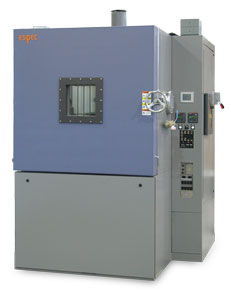
Altitude chambers are designed to simulate the low-pressure environments encountered at high altitudes. These chambers replicate the reduced atmospheric pressure found at various altitudes. In addition to low pressure, altitude chambers often integrate temperature control to simulate the cold of high-altitude environments.
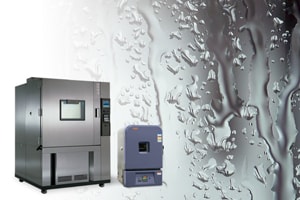
Climatic chambers simulate a variety of environmental conditions including temperature and humidity. These chambers can replicate diverse climates, from the freezing cold of the Arctic to the sweltering, dry heat of the desert. With the added capability of humidity control, these chambers are vital for testing the effects of moisture on aerospace materials that may be exposed to damp coastal climates or the wet surroundings of an aircraft carrier.
As aerospace components often face multiple stressors at once, combined environmental chambers simulate and stimulate various conditions simultaneously. These chambers can integrate temperature, humidity, vibration, and other environmental factors, providing a comprehensive testing environment that replicates real-world aerospace conditions.
Highly Accelerated Life Testing and Highly Accelerated Stress Screening chambers are used for testing aerospace components beyond their normal operating conditions to identify weaknesses and failure points before they cause problems in the field. HALT is used to uncover design flaws in the early stages of product development, while HASS tests help ensure that products are consistently reliable during manufacturing and identify any production shifts. These two test methods deliver some of the most valuable and high return on investment when combined with your overall reliability strategy.
AGREE Chambers are critical tools in the Aerospace industry, uniquely designed to combine temperature, humidity, and vibration testing in a single, controlled environment. This integrated approach allows aerospace engineers to accurately simulate the rigorous conditions encountered during flight and launch sequences, ensuring critical components and systems maintain reliability, safety, and performance under real-world stress. ESPEC's AGREE chambers set the industry benchmark, empowering your team to deliver mission-critical aerospace solutions with unparalleled precision and reliability.
Thermal shock chambers simulate the rapid and extreme temperature changes that aerospace components can experience, such as during launch or re-entry. These chambers quickly switch between high and low temperatures, subjecting the components to intense thermal stress.
Thermal chambers are used to test the thermal properties of aerospace components, subjecting them to extreme hot and cold temperatures over an extended period. These chambers are essential for testing materials, electronics, and structural components that need to maintain functionality in extreme environments.
ESPEC’s aerospace chambers are equipped with advanced features to ensure precision, reliability, and versatility in testing. Below are the standout features that make our chambers the ideal solution for your aerospace testing needs:
At ESPEC, we take pride in offering aerospace test chambers that provide the reliability and precision aerospace engineers require. Our chambers are designed to meet the rigorous standards of the aerospace industry, ensuring your components are ready to perform in the harshest environments.
Aerospace testing standards are developed by organizations and regulatory bodies to set benchmarks for performance, safety, and durability. These standards cover various testing methodologies, materials, and components used in the aerospace sector. Below are some of the most widely recognized standards for aerospace testing:
MIL-STD-810 is a series of environmental testing standards developed by the U.S. Department of Defense. It provides comprehensive guidelines for environmental testing, covering factors such as temperature, humidity, vibration, shock, and altitude. MIL-STD-810 is widely used in both military and civilian aerospace applications to ensure that components can withstand the extreme conditions they might encounter during operation. This standard is particularly important for aircraft, spacecraft, and defense systems.
RTCA DO-160 is a set of standards for environmental testing of avionics equipment, ensuring that electronic systems used in aircraft can function safely and effectively in harsh environments. DO-160 includes tests for temperature, humidity, electromagnetic interference, vibration, and more, specifically for avionics systems. Compliance with DO-160 is mandatory for all avionics systems used in commercial aircraft.
AS9100 is a quality management standard developed specifically for the aerospace industry. It sets requirements for quality control and reliability in the design, production, and maintenance of aerospace products. AS9100 certification ensures that companies follow rigorous processes for managing quality and consistency across aerospace components and systems. This certification helps aerospace manufacturers meet both safety and operational reliability requirements.
When comparing these standards, it’s important to note the unique focus of each:
While these standards serve different purposes, they all share a common goal: ensuring that aerospace products are built to withstand extreme conditions and perform as expected in mission-critical applications.
Compliance with aerospace testing standards is crucial for the safety and reliability of aerospace systems. Testing is the only way to ensure that components can endure the intense environments of space, high altitudes, or the extreme vibrations of flight. Without proper testing, aerospace products could fail prematurely, jeopardizing both the mission and the safety of the crew.
By adhering to established testing standards, manufacturers can:
At ESPEC, we are dedicated to ensuring that every aerospace component tested in our chambers meets or exceeds industry standards. Our test chambers are designed to replicate the exact conditions specified in MIL-STD-810, RTCA DO-160, AS9100, and other relevant standards. We recognize that meeting these standards is critical to product success and safety, which is why we offer advanced testing capabilities that help aerospace professionals validate their products with precision.
While many testing methods focus on meeting basic requirements, ESPEC’s HALT and HASS testing goes beyond compliance. These methods are not intended to merely meet the specifications outlined in industry standards; they are designed to exceed them. HALT and HASS push components beyond their specified limits, helping identify potential failure points as early in the product development process as possible. This proactive approach ensures the highest level of reliability, expedites time to market, and delivers impressive ROI even under the most extreme conditions.
ESPEC is committed to maintaining the highest level of quality and compliance with industry standards. Our testing facilities and equipment are certified and accredited to meet international aerospace testing requirements. Some of our key certifications include:
Through these certifications, ESPEC ensures that we not only meet industry standards but also continually improve our processes to deliver the best possible results to our clients.
With over 40 years of experience in aerospace environmental testing, ESPEC has established itself as a leader in the field. Our team of expert engineers and technicians brings unparalleled knowledge and expertise to every project, ensuring precise testing and reliable results anywhere in the world. Our deep industry experience allows us to address complex testing challenges with customized solutions that meet the unique demands of the aerospace sector.
ESPEC stands out in offering specialized testing services, particularly HALT/HASS testing, which helps aerospace professionals exceed industry standards by identifying failure points early in the design phase. Our vibration testing expertise ensures that flight electronics and components can withstand the mechanical stress they’ll face during operation. These advanced testing methods enhance the reliability of aerospace systems, from satellites to commercial aircraft, by subjecting them to the extreme conditions they'll encounter.
The ESPEC Solutions Group is your trusted expert partner, providing unparalleled knowledge, specialized training, and comprehensive support to aerospace teams at every stage—from initial design to full-scale production. With deep industry expertise, our dedicated professionals ensure your testing programs and reliability strategies align seamlessly with aerospace standards, enabling your team to optimize performance, mitigate risks, and confidently deliver products that excel under the most demanding conditions.
At ESPEC, customer satisfaction is a top priority. We provide exceptional field service and support, including remote troubleshooting, to ensure your testing process is seamless. Our commitment extends beyond testing, with training and education services that empower your team to operate our systems effectively and maximize testing capabilities. Whether it's on-site assistance or training on best practices, ESPEC is here to support your aerospace testing needs every step of the way.
As sustainability becomes a driving force in every industry, aerospace is no exception. With a growing emphasis on reducing environmental impact, the aerospace sector is looking for eco-friendly testing methods and solutions that support sustainable development. ESPEC is committed to advancing energy-efficient test chambers and sustainable testing practices, ensuring that we can meet the needs of today without compromising the future.
Our partnership with Airgas/Air Liquide to use ECO ORIGIN LN2 (carbon-neutral liquid nitrogen) reflects our dedication to sustainability. This eco-friendly innovation ensures that our testing processes align with broader environmental goals, reducing the carbon footprint while maintaining high testing standards.
The Advanced Air Mobility (AAM) sector, including eVTOL (electric vertical takeoff and landing) vehicles, drones, and urban air mobility solutions like air taxis, is rapidly evolving. As these technologies take flight, the need for precise, high-quality testing becomes critical. The challenges of testing for AAM are unique, requiring customized solutions for components that must function safely and efficiently in highly dynamic, urban environments.
ESPEC is at the forefront of AAM testing, equipped with specialized chambers and testing methodologies to ensure these next-generation technologies meet the stringent safety and reliability standards required for commercial use.
As aerospace technologies advance, the trend toward miniaturization of components is gaining momentum. From microelectronics to MEMS (Micro-Electro-Mechanical Systems) and nanotechnology, these smaller components need to be tested for extreme conditions with the same precision as larger ones. This trend presents unique challenges in environmental testing, requiring specialized solutions to assess reliability, performance, and durability in compact forms.
ESPEC is equipped with cutting-edge tools and expertise to perform microelectronics testing and other tests tailored for these miniaturized components, ensuring their functionality and longevity in aerospace applications.
The commercial spaceflight industry, including space tourism and human spaceflight, is booming, driving a demand for reliable testing solutions. With human passengers venturing into space, the need for rigorous spacecraft reliability testing and payload testing is more critical than ever. As companies develop new space missions and commercial space ventures, ensuring the safety and performance of every component is paramount.
ESPEC supports the space tourism and commercial spaceflight sectors with advanced testing services to ensure that spacecraft, propulsion systems, and associated technologies are safe, reliable, and ready for the demands of human space travel.
As the aerospace industry evolves, so too do the testing requirements. ESPEC remains committed to staying ahead of these trends, ensuring that we provide innovative solutions that support the future of aviation, space exploration, and advanced technologies. Whether it’s sustainable practices, the rise of AAM, or supporting the commercialization of space, we are dedicated to helping aerospace professionals achieve the highest standards of safety, reliability, and performance.
ESPEC stands out as a leading provider of aerospace environmental testing solutions for several key reasons:
Ready to take the next step in ensuring the reliability and performance of your aerospace components? Contact ESPEC today for a consultation, quote, or to learn more about how our industry-leading environmental testing solutions can meet your specific needs. Our team is here to guide you through the process and help you achieve your testing goals.
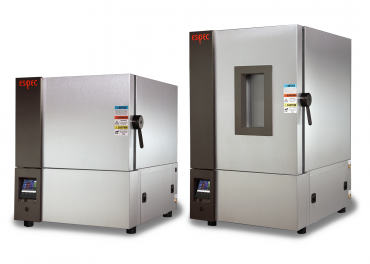
Twenty different benchtop models
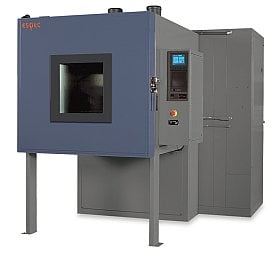
Industrial-quality chambers for combination testing with vibration systems
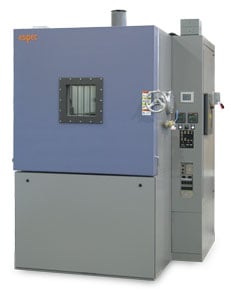
Simultaneous testing of temperature and low-pressure altitude conditions
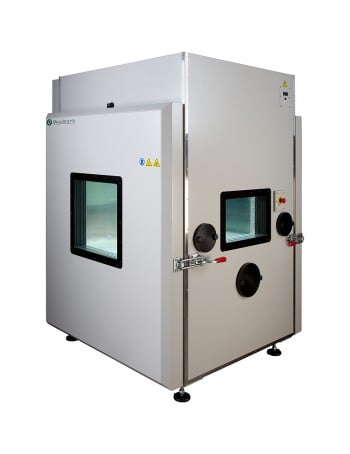
Get your Qualmark or other brand HALT chamber upgraded to a modern control and vibration system.
ESPEC North America, Inc. (Corporate office)